
A Hidden Power That Shapes Our Space and Mood
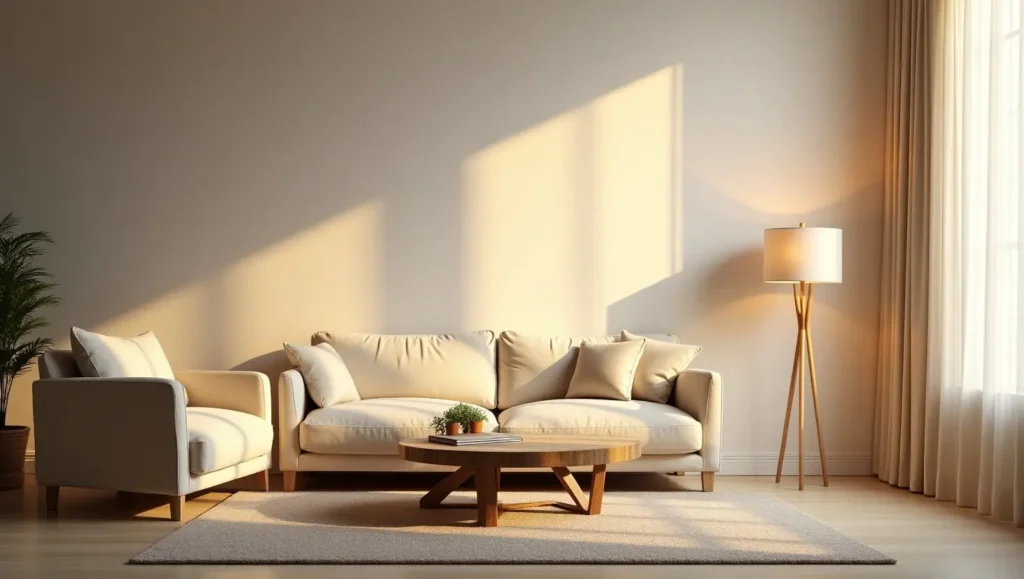
🎨 Lighting Changes the Way We See Paint Colors
Have you ever chosen a paint color in the store, only to find it looks completely different at home?
That’s because lighting changes how we see color.
- Natural daylight shows the truest version of a color.
- Warm lights (yellow tones) make colors feel softer and cozier but can distort cool shades.
- Cool lights (blue tones) highlight freshness but may dull warm shades.
😕 Poor Lighting Can Affect Our Mood
Lighting doesn’t just help us see—it helps us feel.
- Low or gloomy lighting can make us feel tired, sad, or even anxious.
- Too much harsh light can create stress or a lack of focus.
- Soft, balanced lighting brings a sense of peace, calm, and focus.
Each room in the home should have lighting that matches its purpose and energy. A bedroom needs calm, soft light. A living area may need layered lighting—both functional and relaxing.
🪞 Where to Place Lights Near Mirrors
Mirrors are a strong design element—and lighting around them matters.
- Avoid placing a light directly above the mirror. This creates shadows on the face.
- Instead, place two lights on either side of the mirror at eye level. This gives even lighting and helps in tasks like grooming or makeup.
- For full-length mirrors, a soft light placed on both sides or behind the mirror creates a soft glow and makes the space feel larger.
🛏️ Why We Should Avoid Lights Right Above the Bed
Placing a light fixture directly above the bed—especially harsh, single bulbs—can cause discomfort and disturb rest.
Instead:
- Use indirect lighting, like lamps or hidden strip lights.
- Choose soft, warm bulbs that create a cozy and relaxing vibe.
- Consider wall sconces or pendant lights on the sides of the bed for reading or nighttime ambiance.
🌟 Ambient and Accent Lighting: Balancing Function and Feeling
Lighting comes in layers:
- Ambient lighting is the main source—like ceiling lights or chandeliers. It should be soft and evenly spread.
- Accent lighting adds personality—like wall lights, picture lights, or floor lamps. It adds depth, drama, and emotion.
Using both together helps create a space that is not just functional but emotionally welcoming.
🧠 Other Lighting Tips for a Better Home Atmosphere
- Layer your lighting: Don’t depend on one light source. Mix ceiling lights, wall lights, floor lamps, and natural light.
- Use dimmers: This allows you to adjust brightness depending on the time of day or mood.
- Avoid cold, overly white lights in bedrooms or living spaces. They can feel too clinical.
- Use warm light to highlight art or textures. It adds elegance and emotion to a room.
💬 Final Thought
Lighting is not just a finishing touch—it’s a design decision that affects everything from color and space to our comfort and mood.
If you’re designing or updating your home, start with one simple question: “What kind of feeling do I want this space to give?” Lighting is your most powerful tool to achieve that feeling.
Let’s design not just beautiful spaces—but peaceful, uplifting ones. 💡
